World of Warcraft launched in 2004 with six starting zones for eight races. Final Fantasy XIV relaunched in 2013 with three city-states. Guild Wars 2 opened with five. No MMO has ever launched with thirteen regions, and Runeterra has thirteen, so the first decision Riot's world designers made was which ones a new player sees first.
Riot has not announced it. Before the 2024 reset, coverage named nearly every region as an eventual destination, which is a statement about the whole game and not about its first hour. What follows is an argument from geography, audience and lore about where that hour is most likely to be spent, labelled as the argument it is.
The geography argument
Open Riot's map and three regions sit next to each other on the western half of Valoran: the Freljord across the north, Demacia below it in the west, Noxus to the east of both. A player who starts in any of the three can walk to the other two, and the lands between them are where the setting's oldest war is fought.
That contiguity is worth more than it sounds. An MMO's early zones have to connect, so that players from different starts meet by level ten and the world feels like one place rather than three lobbies. Demacia, Noxus and the Freljord connect by land. Ionia is an archipelago across a sea. Shurima is another continent. Bilgewater and the Shadow Isles are islands. The map itself proposes a starting trio, and it is the trio most fan analyses have arrived at independently.
The audience argument
Piltover and Zaun are not on that list, and they are the two regions the largest audience knows best. Arcane made a city that most of Runeterra's fans could draw from memory, and the unified canon since 2023 means the version they know is the version the game must show. A Riot MMO that opened without Piltover would be turning away the players Arcane sent.
They also sit at Valoran's southern tip, on the strait facing Shurima, a long way from the western trio. The likely answer is that the game starts in four places rather than three: the three neighbours in the west, and the twin city in the south as its own beginning, connected to the rest by sea and by the trade the lore already describes.
The lore argument
Each of the four teaches something a new player needs.
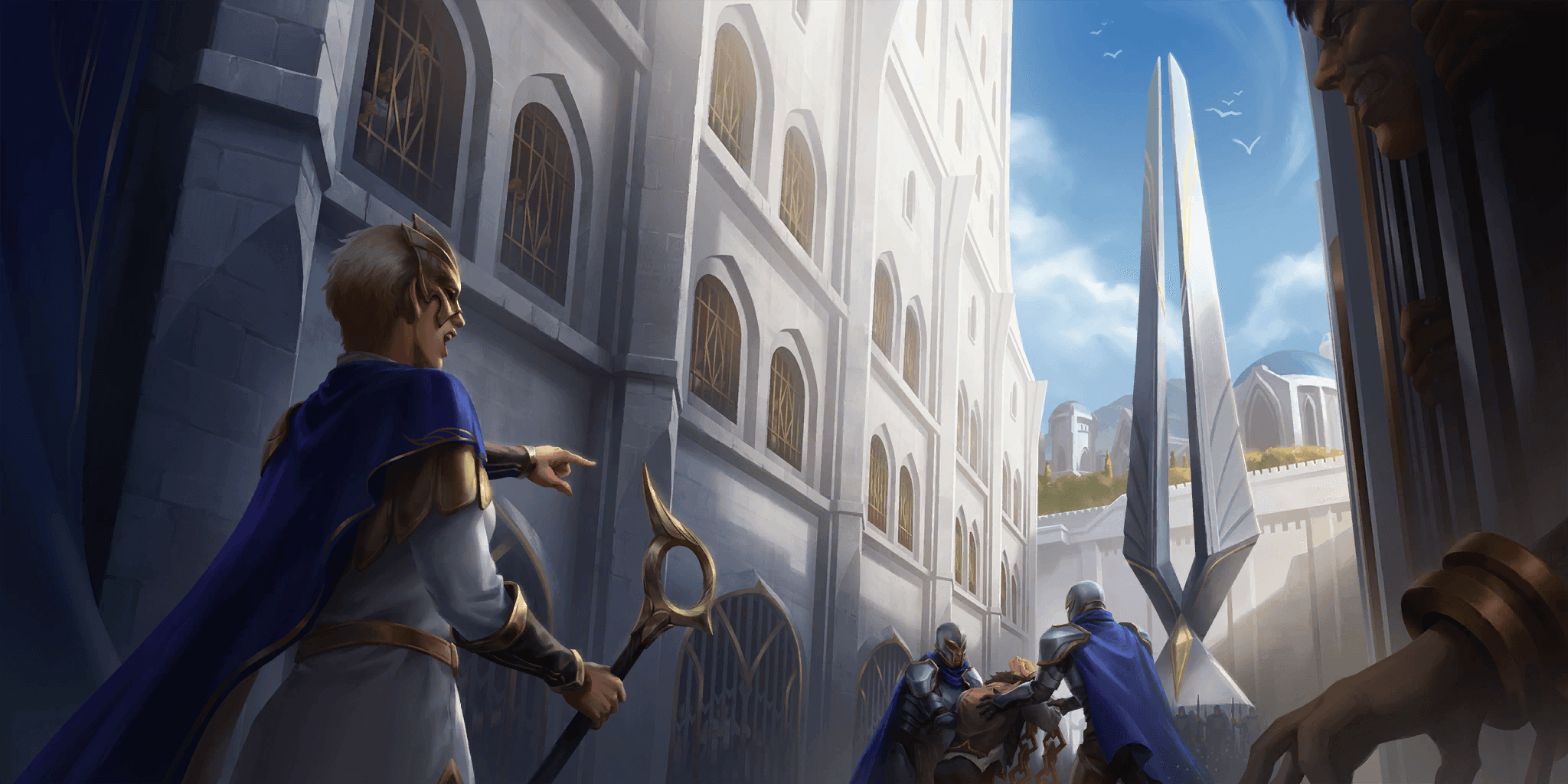
Demacia is the most legible region in the setting: a lawful kingdom, a proud army, a hidden persecution of mages. Its ideals and its hypocrisy fit in one sentence, which is what a starting zone needs. It has sixteen champions to meet.
Noxus is its opposite, and an MMO wants an opposite: an empire that admits anyone and rewards only strength, with seventeen champions and an invasion in its recent past. A player who starts in Noxus learns in an hour why Demacia fears it.
The Freljord teaches survival and faction. Three tribes under three leaders, a landscape that kills the careless, and fifteen champions who are mostly warriors. It is the setting's tutorial in hardship.
Piltover and Zaun teach the modern world: hextech, chemtech, money, and a class divide the player can walk down a staircase to see. Twenty-two champions between them, and the only region with a television series behind it.
The region that probably waits
Ionia has the most champions of any region, twenty-three, and the most usable conflict, the Noxian invasion. It is also across a sea, culturally singular, and built on the spirit realm, a concept that takes explaining. Every quality that makes it the setting's richest region makes it a poor first hour and a superb second act.
Our reading is that Ionia is the game's first great destination rather than its first zone: the place a player from any of the four starts sails to once they know what Noxus is, and the region that carries the game's central war. If Riot ships an expansion-sized region at launch, this is it.
The rest
Shurima is a desert continent and an empire returning from the sand, which is end-game material by any reading. Targon is a mountain you climb to be judged; it waits. The Shadow Isles are where the setting keeps its dead and its highest-level threats. Bilgewater could open early as the port that links Valoran to everything else, and would make a fine hub, but a lawless pirate city is a hard place to teach someone the controls. Ixtal and the Void have no illustrated art to draw from, as the numbers in the 13 regions of Runeterra show, and will be drawn last. Bandle City is not on the map at all.
What the reset might have changed
All of this assumes the pre-reset shape of a large world with regions as zones. Marc Merrill's March 2024 statement that the game was "not different enough" could, in principle, have replaced that shape with something no MMO has used, in which case the question of starting zones is the wrong question. We think that is unlikely, because Runeterra's regions are the product and the reset was about design, but we hold it as a possibility, as we do for every pre-reset assumption in what is left of the 2021 vision.
What we do not know
Whether the player's starting region is a choice, a consequence of race, or fixed. The link between region and character is worked through in playable races.
How many regions ship at launch. Four starts and one destination is a guess; three and none is possible; the whole map is not.
Whether Riot regards Piltover and Zaun as one starting zone or two. Arcane treats them as one story with two halves, and the map paints them as one place.
Whether any of it survived the reset. Riot has confirmed the setting and nothing about its shape, and the current state of what is known is in everything we actually know about the Riot MMO.